


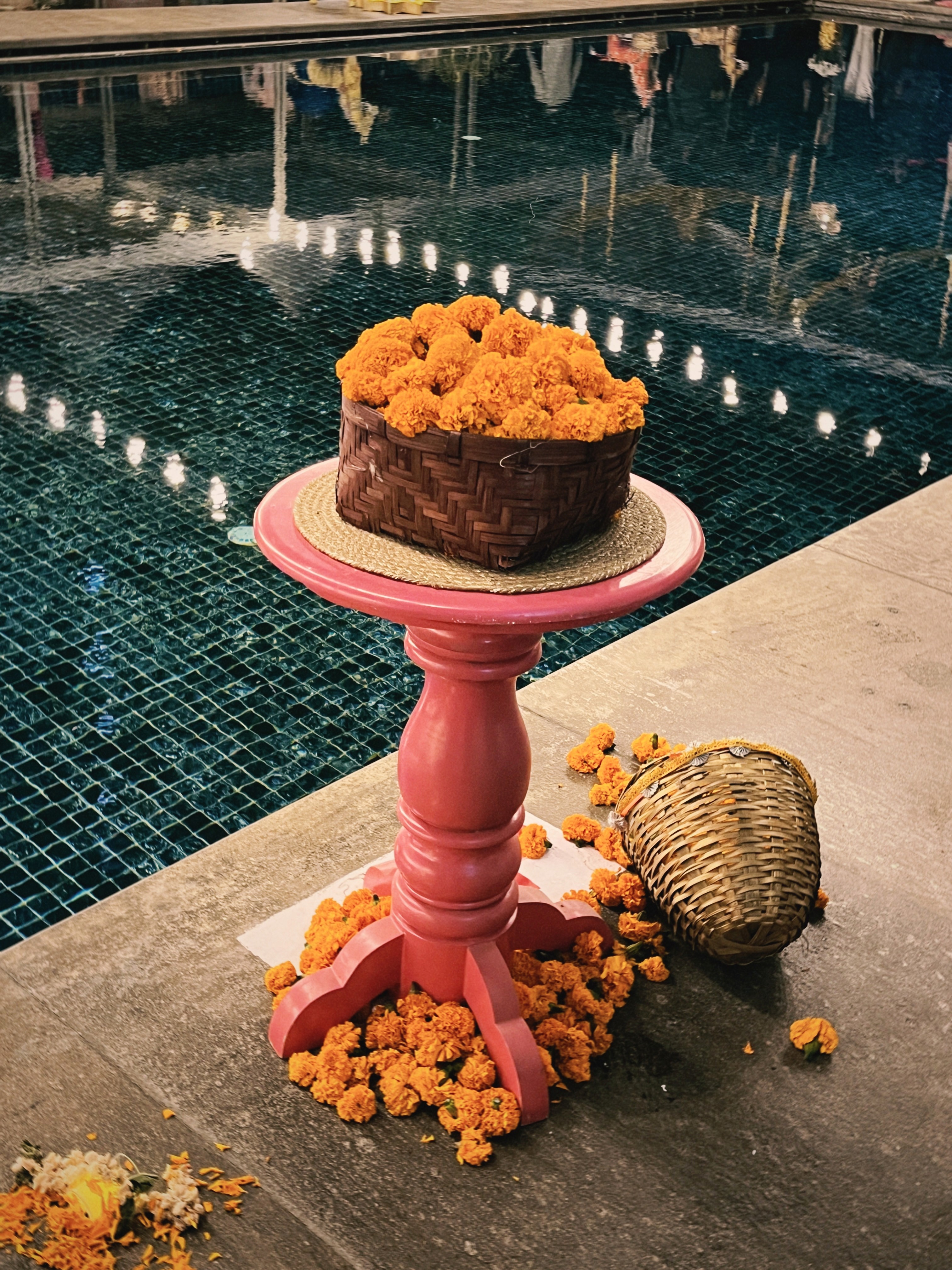

The visual language borrowed heavily from Indian weddings, marigolds, layered florals, loud decor, and stage setups, but removing the couple changed the energy completely.


Every element was designed to feel instantly familiar. The stage stopped feeling like a focal point and slowly became part of the party itself. People climbed onto it, danced on it, took photos there, and sat there as it belonged to them.


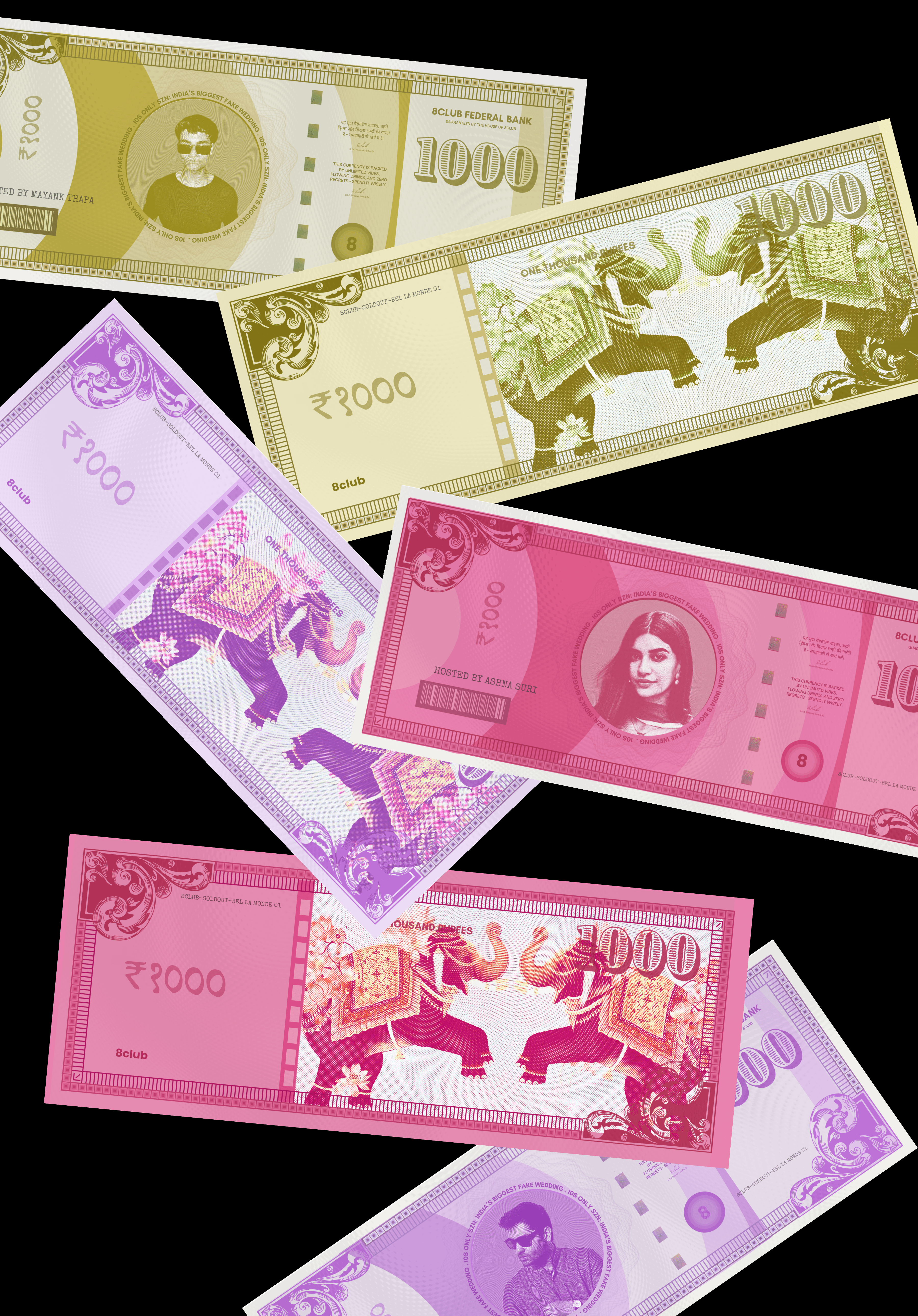
A lot of the experience came together through smaller touchpoints. Food stalls became characters - Baarat Bao Co., Jalebi Junction, Barf-e-Bottle - with copy that felt playful instead of branded. Mehendi corners, chudi counters, custom currency, wristbands, photo booths, and on-ground signages were all designed to feel interactive rather than ornamental. The idea was to make the space feel less like an event venue and more like stepping into a world with its own logic, language, and behaviour.


What made the format work was how naturally people leaned into it. Everyone showed up in ethnic fits, participated in rituals that technically weren’t even real, and started creating their own moments inside the space. Nobody waited to be entertained; the crowd carried the energy on its own.


That energy translated quickly beyond the venue. Videos from the night crossed 300K–900K+ views, alongside reposts, UGC, and media coverage that extended the experience far beyond the event itself. At some point, it stopped feeling like a one-night concept and started behaving more like a format people instantly understood.


What Fake Shaadi ultimately proved was that people don’t always need something completely new. Sometimes, all it takes is a familiar format with enough room for participation. Once people feel like they belong inside the experience, they stop consuming it and start shaping it themselves. Not an event to attend, but a space to step into.


